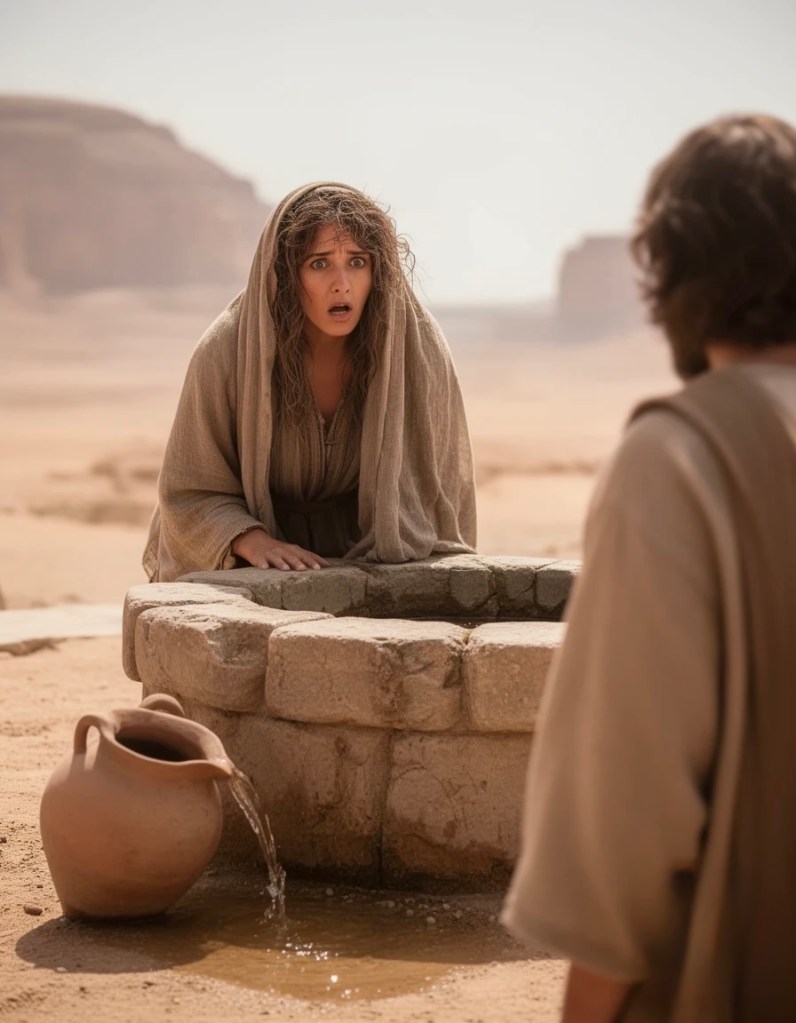
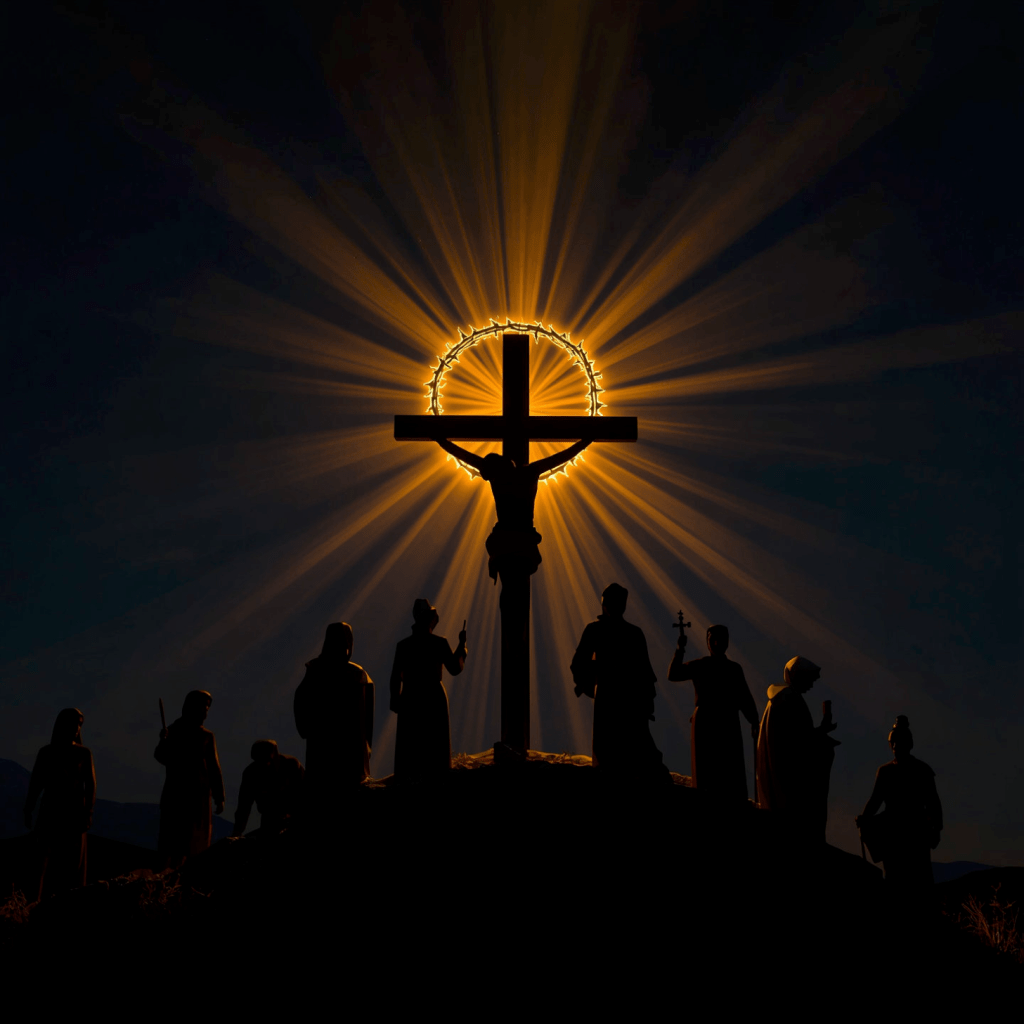
At Jacob’s well, Jesus meets a Samaritan woman. The barriers that usually keep people apart—history, suspicion, old wounds—fall away in the midday light. There is no condemnation here. Instead, Jesus offers living water, reaching into the dry places of the heart, offering hope that endures.
Midday. Heat presses down. Jesus, weary from the road, sits by the well. A woman approaches—one who carries the weight of being overlooked, dismissed, misunderstood. Jesus does not turn away. He listens. He brings her story into the light, not to shame, but to heal. He offers her more than water: a new beginning, a life that springs up from God’s own heart. She leaves her jar behind, her old burdens forgotten, and runs to share what she has seen.
Her story becomes ours. We, too, carry wounds and quiet shame. We, too, stand at the well, longing for something more. Jesus meets us there—not with rejection, but with grace. As we get this living water, fear loosens its grip. Our lives become wells of compassion, spilling over with hope for those around us.
Have you ever noticed how light appears before we fully grasp its presence?
This week, we explore how faith emerges like dawn—not in dramatic bursts, but in quiet acts of faithfulness. Through Isaiah’s timeless wisdom, we discover that light breaks forth not when we chase it. It shows up in simple moments of sharing bread, opening doors, and caring for others.
Whether you’re seeking purpose in life’s rush or yearning for spiritual clarity, this message shows that God’s light is already here. It shows how it is waiting to be recognised in our everyday acts of love. Don’t miss this timely reminder of how faith unfolds at God’s perfect pace.
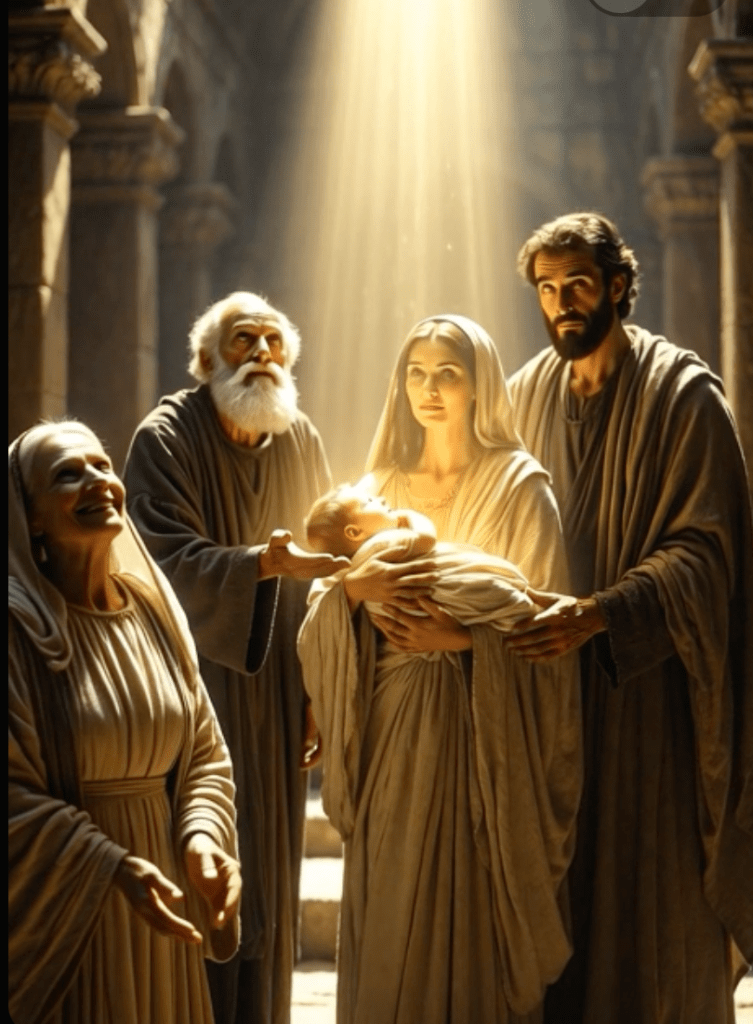
Waiting for the Light invites us to linger with the Feast of the Presentation — a moment poised between endings and beginnings. Christmas has faded, Lent has not yet arrived, and we stand, like Simeon and Anna, holding promise without rushing toward conclusion. This reflection listens for what Scripture says when faith is shaped not by certainty, but by long, faithful waiting.
Drawing on the images of refining fire, humble offerings, and light entering the temple quietly, the piece explores wisdom gained over time — the kind that does not demand answers, but recognises God when God appears. Simeon’s release and Anna’s renewed proclamation remind us that some pilgrimages end gently, while others turn outward in unexpected ways.
In a season marked by fragility, uncertainty, and waiting — both personal and shared — this reflection offers space rather than solutions. The attached text is written to be read slowly, or even spoken aloud, allowing silence to settle where meaning continues to unfold. It asks not what comes next, but how we wait, and what light we are being entrusted to carry.
There is an inherent cohesion running through the readings as set for Epiphany 3A.
In Isaiah 9, the prophecy begins, “here will be no gloom for those who were in anguish”, and then progresses to one of the most loved Isaiah verses, “The people who walk in darkness have seen a great light…” What is of import here is that the prophecy is not only located in the very place that Jesus calls his disciples and begins his Messianic mission, but is to extend beyond there.
Interestingly, there is still a gloom over these once-occupied and disputed territories. (worth looking at the 1947 resolution, and the consequential battles).
Nightly, I have conversed in the region, talking with people trying to survive while, all around them, the remains of buildings and infrastructure lie in ruins. War is one thing, but collateral damage against those considered foreigners in the land violates Leviticus 19:33–34, 24:22, and 25:35.
The command is love your neighbour as yourself, not be kind to strangers. On the principle of love of God, and love of neighbour as yourself hang all the laws and prophets.
Yet
Add to that Jesus’ own insistence that when he was in a stranger’s guise, did you offer hospitality (lest we forget the transgressions of Sodom and Gomorrah).
So, the Gospel passage today technically begins in Northern Israel, as the State of Palestine is disputed, but even in Jesus’ time, this area was on the margins and in the shadow of how the rest of the world treated it. It was in the margins that Jesus called the four and promised to teach them to fish for people. It was around the Galilee of the Nations (Matt 4) that the blind began to see, the deaf heard, at synagogues, the law of God was proclaimed, and the lame were liberated from their disabilities.
Then, here in Australia, we just had a day of national mourning for the unacceptable terrorism unleashed on Bondi Beach, targetting a people of faith in the name of ideology.
Where Jesus walked is in constant mourning, need, poverty and desperation. We dare not have a day for that? Or this coming Monday, mourning the disastrous effects of colonialism on this Great Southern Land?
More and more, we need to be people of light and unity. Paul addresses unity in Corinth not by shutting down factions, but by reminding those who confess Christ Jesus of the need to focus on mind, body, soul, and strength.
In the light. Beyond the Sea of Tiberius and the Galilee of the Nations.
Maybe I’m a Christian mystic with Piscean overtones of dreaming whilst trying not to drown in a sea of gloom. If I could bring the light of Christ and peace to any conflict in the world, I would.
Dreaming is strongly biblical. It is in synergy with our Traditional Custodians of the Land. From dreams, beginnings happen, realities are forged, and hope reigns within our faith and love. It has no reward other than simply being the best person, reflecting the image of God within us back into the community.
I wouldn’t demand a medal I wasn’t entitled to. If I did receive one, along with the 10 million euros, I know where it would be spent: on food, delivery, infrastructure, rehabilitation of innocent children, and a foundation for peace.
Oh, and of the medal itself? It would be straight down to the pool room with all the other good stuff.
This week’s homily will not be preached on Sunday, 11th January, but I spent considerable time reflecting on what the four verses of the Gospel of Matthew mean. Bit of a minefield, really.
Down here, we’ve had a week of unprecedented heat, with this little coastal hamlet reaching mid-40ºC several times. Add to that gale-force winds and power cuts, and it’s been, well, not the iced-over world some of my friends in the UK are experiencing! Visitors today from Aberdeen to St Peter’s most certainly were experiencing culture shock!
So… Living Together in the Light is also the working title for the Lenten Study, due to be available by the end of the month.
Please pray for the volunteer firebrigades. They are our friends, heroes, and backbone.
The words of Isaiah are etched rather deeply into my mind, but for a rather cynical reason rather than joyful! At seminary, each Monday morning office began with those words, and more often than not, it was led by a monastic who possessed the most glorious “north of the Tweed” drawl! (If you know, you know!) Somehow, it seemed to mock the joy of being back for the week!
But we are called into Christ’s marvellous light, and in the context of an Australian summer, where the north wind is more than tossing the leaves, it is shredding the branches, and about to bring temperatures of in excess of 40ºC during the coming week. On the pleasant side, if the sky isn’t too illuminated by the future Full Moon, another geomagnetic storm is about to be unleashed on planet Earth, and the southern and northern lights (auroras) will be visible beyond the (Ant)arctic Circles.
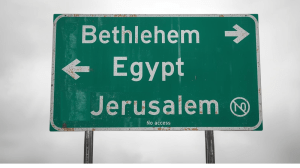
Astrologers from the East had “seen the King’s” star, and, to borrow a joke from Ted the Sheep, began the first ever Star Trek to Jerusalem. Herod the Great, a Jewish convert and appointed puppet of Rome, was none too pleased to hear that one with a better claim on the throne had been born. And…what followed as a result was a minor genocide, the Holy Family fleeing to Egypt, and only returning when Herod had died. They settled in Nazareth, in the northern hills of Israel. History is once again rhyming, prophecy fulfilled, and all sorts of wonderful stories began.
We, too, are called to follow the ‘light’, not as much as a result of forbidden Astrology, but rather, the true light that comes into the world. The start of the new year (in terms of whatever calendar you prefer to follow) is often seen as a time for new beginnings. And we celebrate that new beginning often with fireworks, bursting forth into the night as bright shining stars. Millions flock to see the lights. For Christians, this is a time to pay our homage, and then, arise, shine, and let the light not only guide us from any wilderness, but to show the path to others that they, too, may come and pay homage to the child.
May this be a year of letting the divine spark of life in essence within us, the image of God in which we were created, shine as we share our countenance with all whom we meet.
Shanna Hetrick’s brilliant sermon now attached below.
This week is not based on a sermon but on an essay on current events and how difficult it can be to accurately address the present issues.
The text reflects on the Feast of the Holy Innocents as a necessary disruption of comforting Christmas images, insisting that the Incarnation involves vulnerability, violence, and grief rather than just a soft-focus nativity.
Using the example of a new Lay Reader preaching on this challenging topic, it explores the moral courage required to address themes of terror, injustice, and the genocide of children in a way that avoids antisemitism while honestly engaging the historical and political context of the biblical narrative.
Drawing on scholarship (especially Daniel Harrington SJ), it presents Matthew’s Gospel as a deeply Jewish text whose harsh polemic has sometimes fuelled anti-Jewish readings, yet also holds strong potential for reconciliation and Christian–Jewish dialogue when read historically and theologically. The reflection urges careful, responsible interpretation, awareness of the reader’s experience, and vigilance against the risk of misusing Scripture.
It proposes concrete pastoral responses—prayer, outreach, education, and interfaith dialogue—to foster lament, solidarity, and moral vigilance. In closing, it challenges the community to resist Pilate-like detachment, remain with the complex story of the Holy Innocents, confront contemporary antisemitism and suffering, and choose uncomfortable truth over sentimental comfort as a path toward healing and genuine understanding.
“It is the same thread given to us by the echo of Matthew’s community: in the face of turmoil and a sense of helplessness, we have an origin that provides us with a solid foundation to sew the thread into the future.
God intervened in history at a particular time for a peculiar people. In the midst of the mess that is our world, with the same story of children being deliberately targeted, we have an assurance that he will do so again. The four “p’s” are our guiding thread: prayer, preparation, patience and perseverance. We may never know where our thread will echo in the future, but it will.
On Christmas Eve, we celebrate the birth of Jesus, the light that interrupts darkness and brings hope, peace, joy, and love. This light, embodied in a vulnerable child, is not just a memory but a present reality that shines into our lives, even in the darkest moments. We are called to reflect this light through kindness, courage, and compassion, sharing it with others and bringing hope to a world in need.
This study guide was put together prior to the terrorist activity afflicting the Jewish Community of Bondi North, Sydney, on 14th December. Chanukkah, a festival of joy, became a moment in history where ideology masquerading as faithfulness sought to bring as much pain as possible on a day when Christians were also celebrating the Joy of God’s presence.
The Advent message remains one of light and hope. Today, we explore the interruption in light of the mourning of the people of faith in Bondi, and our sisters and brothers of all Abrahamic Faiths.
In a world often gripped by fear and uncertainty, we illuminate the profound mystery of Advent’s fourth candle – Love – weaving together the stories of King Ahaz, Joseph, and the “doubting” Thomas to reveal God’s transformative presence among us.
Through Isaiah’s ancient prophecy of Emmanuel and Matthew’s account of Joseph’s faithful response to the divine dream, we witness love taking flesh in the most unexpected ways.
These biblical narratives to our present moment, reminding us that God’s love isn’t a distant concept but a living reality that continues to manifest in our community, beautifully exemplified through the six-decade-long ministry of faithful servants like Fr Jim Reeves and Fr Michael Fox.
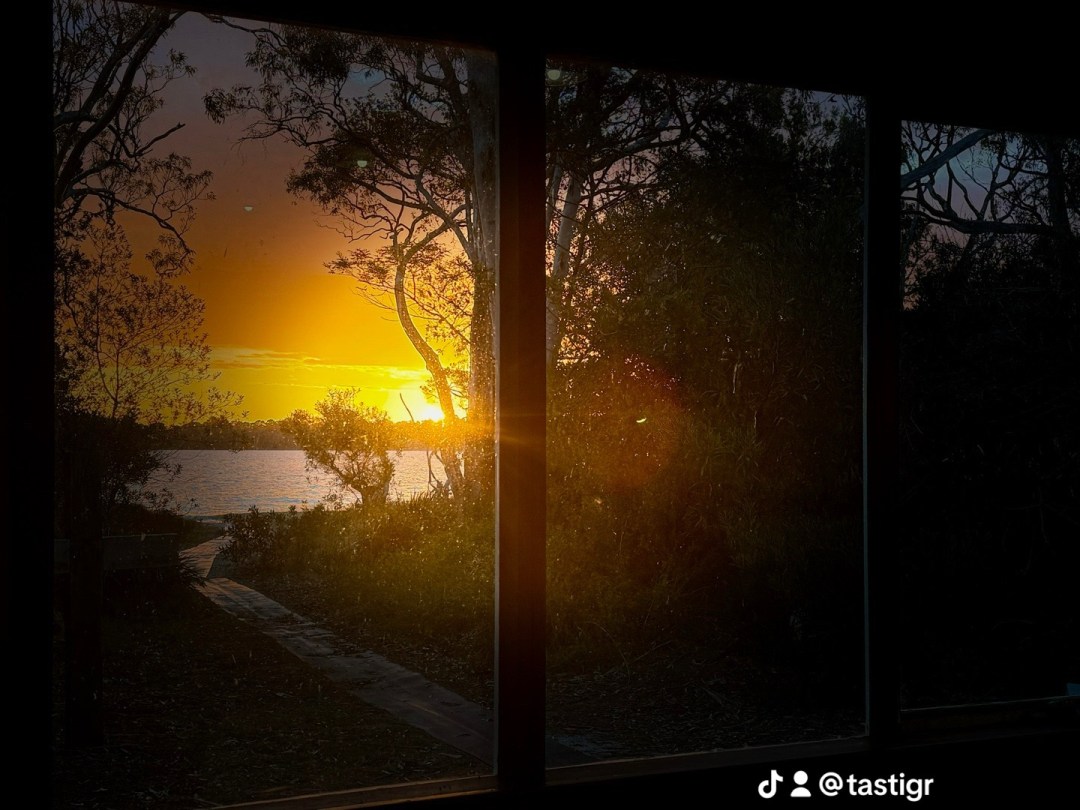
By the serene waters of Gippsland Lakes, where horizon meets heart, we’re challenged to recognise that Advent love isn’t passive but incarnational – calling us, like Joseph and Thomas, to move beyond our doubts and fears to embrace God’s presence in tangible ways.
As we approach the celebration of Christ’s birth, we’re urged to let this divine love take flesh in our own lives, transforming our service, compassion, and faith into living testimonies of Emmanuel – God with us.
We pray for those disturbed by acts of terror.
We pray for those whose lives have been taken by others who choose to kill as a sign of fidelity.
O Oriens, Radiance of eternal Light, Sun of righteousness, come and shine on those who dwell in darkness and the shadow of death.
Where hearts are heavy and hopes grow thin, rise upon us. Where nations strain toward peace, dawn among us. Where the weary wait for morning, be our light.
As blessing once flowed from Aaron— down beard and robe, binding the tribes in one calling— let your light now fall upon all peoples, gathering what is scattered, healing what is divided, and warming the cold places of the world.
Turn our faces toward the coming day. Teach us to walk as children of the dawn, until night yields to joy and all creation lives in your light.
Come, O Dayspring. Do not delay. Amen.
We pray for the person whose ideals are fed by evil and false narratives
We pray for the peace that passes all understanding, in our hearts, mind, soul and strength, the very place we are asked to love our Creator and all people.
Advent is the season when the Church stands in the half-light of dawn—between what has already been and what is yet to come. It is a time when we lean forward into God’s promises, listening for the quiet stirrings of joy in unexpected places.
Here in our southern land—where Advent arrives not with winter darkness but with long evenings, cicada-song, and warm winds—joy takes on its own texture. It appears in green shoots on burnt ground, in birdsong before dawn, in the neighbour who checks in unasked, and in the quiet strength we draw from community.
Gaudete Sunday—“Rejoice!”—is a pause in the season’s quiet waiting, a reminder that joy is not only ahead of us but already among us.
This study invites groups and individuals to listen deeply to the voices of Isaiah, the Psalms, James, and the Gospel. Each reading opens a different window onto joy: blossoms in the desert, God’s steadfast care for the vulnerable, the honesty of doubt, and the unmistakable signs of renewal that mark the kingdom of God. Together they reveal that joy is not a fleeting emotion but a posture shaped by trust, mercy, and expectation.
Light interrputing darkness Grace interrupting sin Peace interrupting fear God interrupting history Christ interrupting expectations.
And Matthew’s genealogy proclaims the same truth. God works in the interruptions.
Are you feeling the weight of darkness in your life? Like those early morning birds on the lake who herald the coming dawn before anyone sees it, come with us into Advent’s transformative promise. Through vivid stories of nature’s dawn chorus and Paul’s urgent call to “wake from sleep,” this message reveals how we can live as people of dawn—even when light seems distant. Learn practical ways to shift from fear to faith, from exhaustion to hope, and from distraction to devotion. This is a timely reminder that God’s new day is already breaking—discover how to become a herald of hope in our weary world.
Have you ever felt the world spinning out of control, yearning for something solid to hold onto? Today, we explore how Christ’s kingship offers not a distant authority but an intimate grace that holds our fragmenting world together. Through Jeremiah’s shepherd-king, Zechariah’s dawning light, and the paradox of a crucified King, we discover how hope transforms into grace at the cross. Whether you’re seeking direction or desperately in need of assurance, this timely message reveals how Christ’s reign brings healing to our fractured lives. In this transformative journey from hope to grace— discover how Love holds all things together.
As the congregation stands between the Year of Hope and the Year of Grace, we are challenged to embody this transformative grace in our community – to become agents of compassion, forgiveness, and light.
The urgent call rings clear: in Christ’s reign, love overcomes fear, mercy triumphs over judgment, and grace conquers death itself. God reigns in forgiveness as we all receive, grace upon grace.
In a world that often feels like it’s burning, as we approach the end of the International Year of Hope, we once again view it through the lens of Job’s unwavering faith. Drawing parallels between ancient scripture and modern-day struggles, including a poignant conversation with Hassan in war-torn Gaza, he explores the profound mystery of following Christ amid devastation. Through the interconnected stories of Job’s defiant declaration, “I know my Redeemer lives,” and Hassan’s steadfast belief that “Peace will reign,” we can see how God’s glory manifests not in displays of power, but in the suffering love.
Southern Aurora over Lake Victoria, 12 November 2025
When confronted by the fiery prophecies of Malachi, the victorious praise of Psalm 98, and Jesus’s sobering words about endurance, it is apparent that endings often signal God’s new beginnings. The sermon crescendos with a compelling truth: we follow Jesus not because the path is safe, but because He has already walked it and awaits us.
In these turbulent times, the challenge is to embrace Job’s steadfastness, Paul’s dedication, and Christ’s enduring promise that by our endurance, we will gain our souls. His urgent call beckons us to work quietly, love deeply, and hope fiercely, knowing that our Redeemer lives and stands with us still.
This sermon, titled “I Hear the Ancient Footsteps,” integrates themes of Every Grain of Sand, the meteor moment, All Saints continuity, Remembrance, CFA/SES thanksgiving, and the significance of steps. It emphasises faith as defiance against meaninglessness, resurrection as real, and the end as not terror but Kingdom, communion, and Christ. The sermon encourages standing firm, like CFA & SES in crisis, and highlights the importance of our footsteps, walking with those who have gone before us and those who will come after.
The five-day devotional will be trekking the sermon from this weekend. It will explore the themes of faith, hope, and resilience in the face of life’s uncertainties. Each day will offer reflection, prayer, and a closer examination of the Scriptures shared during the sermon, guiding us on a journey toward understanding and embracing our steadfast God and His plans for us.
The sermon for All Saints’ Day celebrates the communion of saints, emphasising that saints are not distant figures but a living, breathing family spanning heaven and earth. It highlights that the communion of saints begins now, as we are adopted into God’s family and called to live out our inheritance with courage and gratitude. The sermon challenges the congregation to embody this inheritance through acts of love and service, inspired by the saints of Scripture, history, and their local community.
This week, we explore the theme of change and growth, drawing parallels between the evolution of music and the journey of faith. It highlights the need for lament, hope, and faithful love, as exemplified in the scriptures from Jeremiah, Luke, and 2 Timothy. The sermon encourages embracing change, trusting in God’s mercy, and living as agents of His love, even amidst technological advancements and shifting musical styles.
Ultimately, we are encouraged as the congregation to fully embrace change as an essential part of life and faith. It speaks to the importance of trusting in God’s unwavering mercy as we navigate our personal journeys and the world around us. Furthermore, we are challenged to live as active agents of His love, inspiring others through our actions, especially in an era marked by rapid technological advancements and continually shifting musical styles.
By doing so, we can cultivate a community rooted in love, hope, and faithfulness amidst the inevitable changes we encounter.
Can faith as small as a mustard seed really transform your life? Through the lens of the devastating Australian bushfires, we share a powerful message about the resilience of faith. Just as charred landscapes burst forth with new life, our faith isn’t measured by quantity but by unwavering trust in God’s promises. Drawing from Habakkuk’s honest questioning and Jesus’ surprising response to the apostles, this message reveals how authentic faith waits, trusts, and serves—even in life’s darkest moments. Ready to discover how your smallest seed of faith can flourish into something remarkable? Don’t miss this transformative message about finding hope in the ashes.
Have you ever caught yourself shrugging off others’ suffering with “that’s just how things are”? In this powerful message, we are challenged to overcome our complacency through Jesus’ parable of Lazarus and the rich man. Through vivid contrasts between a life of lavish feasting and desperate poverty, we discover that God’s heart breaks for those we often overlook. Drawing parallels to modern attitudes about wealth and poverty, Jesus reveals how self-satisfaction blinds us to our divine calling. Don’t miss this convicting exploration of true Christian compassion—discover how stepping out of comfort into Christ-like generosity leads to “the life that really is life.”
God invites us to align our hearts with His, embodying mercy, justice, and restoration. Jesus’ healing of the bent-over woman exemplifies true Sabbath worship—acts of mercy. St Bartholomew’s life reminds us to be faithful witnesses, aligning our hearts with God’s through integrity, openness, and trust.
God’s Heart: God desires mercy, justice, and restoration, inviting us to align our hearts with His.
True Worship: True worship involves breaking oppression, caring for the weak, and showing mercy, as exemplified by Jesus’ healing of the woman on the Sabbath.
God’s Kingdom: We belong to an unshakable kingdom, prompting us to worship with reverence and gratitude, rooted in trust.
Mercy’s Power: Jesus’s actions demonstrate that mercy surpasses rigid rules and brings restoration and freedom.
God’s Mercy in Action: The story of the woman bent over for eighteen years illustrates how God’s mercy lifts us up and restores our dignity.
Application to Our Lives: We are called to embrace God’s mercy, choosing compassion and freedom over fear and legalism, and to live as instruments of restoration in the world.
Bartholomew’s Character: Open, honest, and faithful follower of Christ.
God’s Promise: God will raise a prophet to speak God’s words, fulfilled in Jesus Christ and carried forward by disciples like Bartholomew.
God’s Presence: God is near to all who call upon Him, as seen in Jesus’ interaction with Nathanael.
Bartholomew’s Legacy: Bartholomew’s name is inscribed on the foundations of the New Jerusalem, symbolising the enduring impact of his witness.
Call to Faithful Living: The readings encourage us to follow the Way, the Truth, and the Life, even from a place of doubt, and to build our lives on Christ.
Bartholomew’s Example: Bartholomew’s life exemplifies integrity, openness, and faithful witness, inspiring us to align our hearts with God’s.
What if your prayers held the power to change the world? How do we align our prayers with the heart of God as we embrace the Lord’s Prayer?
Through the compelling story of Abraham’s bold intercession in Genesis 18, we are reminded that God is always willing to listen and forgive, even in our darkest moments.
Drawing on the consistent theme explored in Luke 10, we are drawn into a conversation about the importance of hospitality in our spiritual lives, describing how engaging in prayer invites us to advocate for justice and mercy in a fractured world.
Breaking Open the Word for the Seventh Sunday of Pentecost
What would you do if you found yourself alone on a desolate road, faced with the urge to help someone in need? In his powerful sermon, Dennis takes us on a journey through the vital call of transformative compassion, urging us to lead with our hearts in moments of decision. He illustrates this with a vivid scenario: encountering a stranded stranger in the outback, challenging us to confront our fears and prejudices.
Drawing on scripture, Dennis emphasises that compassion isn’t just a feeling but a crucial act of love that reflects God’s mercy, one that transcends boundaries and calls for self-sacrifice. He skillfully connects this message to our lives and the church’s mission, reminding us that genuine compassion emerges not from perfection but from humility and the understanding that we, too, are recipients of grace. As we explore the parable of the Good Samaritan,

Dennis invites us to embody this radical love, showing that true transformation begins within. The message resonates deeply: our faith is incomplete without this sacrificial compassion. Join us as we embrace this essential path to God’s heart—listen to Dennis’s sermon and discover the compelling call to “Go and do likewise!”
Are you searching for a place of healing and hope? In his captivating sermon, Dennis invites us to gather “Under the Branches of the Tree of Life,” where we discover a powerful symbol of resilience and divine connection. Rooted in biblical texts, Dennis draws from the profound imagery of the Tree of Life, illustrating how it serves as a reminder of our mission as bearers of peace and healing in today’s world.
He emphasises the commissioning of the seventy by Jesus in Luke 10, exploring how their mission is echoed in our calling to mend relationships and cultivate a community filled with God’s love. With anecdotes of comfort from Isaiah and joyful declarations from Psalms, Dennis emphasises our shared responsibility in participating in God’s re-creation.
He challenges us to reflect: Are we willing to be branches, nurturing life and comfort in our neighbourhoods?
This stirring message not only affirms our identity as vessels of the Kingdom but also compels us to take action: to plant seeds of peace and healing in the lives around us.
Don’t miss the opportunity to engage with this transformative sermon – it might just spark the change you’ve been waiting for!
This weekend, being the Feast of Sts Peter and Paul, or if you wish, just St Peter, we are keeping the feast with an Evensong on Saturday 3.30 pm and a Festive Eucharist on Sunday at 9.30 am.
There are two versions of the sermon…! I’ve kept the original ‘sandpit’ in with questions, but I am more inclined to go with the second, shorter and more lyrical story! Mind you, with two services, I could do both, but yeah, nah! (‘strine noted!)
(‘strine: local bogan dialect of Australia…as in the nation is ‘strine).
Restoration in Christ doesn’t just put us back together—it transforms us and places us within a vibrant, interconnected community. This restoration is not merely about mending what was broken; it’s about reshaping our identity and purpose. In Christ, we are no longer fragmented individuals, isolated by our past or our struggles. Instead, we become part of something greater—a family bound not by blood, but by grace and faith.
We are no longer strangers wandering aimlessly or spectators observing from the sidelines. We are adopted as heirs to God’s promises, woven into the rich tapestry of His family. This new identity carries with it a profound sense of belonging and purpose. The barriers that once divided us—be they cultural, social, or personal—are dismantled through Christ’s work of reconciliation.
The story of Christ’s love and redemption spreads not through grand spectacles or fleeting displays of power, but through the quiet, transformative power of reconciliation. As relationships are healed and communities are restored, the message of Christ’s grace becomes evident. It is in the day-to-day acts of kindness, forgiveness, and unity that the world witnesses the actual impact of his restoration. This is the beauty of Christ’s work: it not only restores but also redefines, drawing us into a community where love, grace, and reconciliation are the hallmarks of our shared journey.
Dennis emphasised the significance of dreams and visions as expressions of hope inspired by the Holy Spirit during Pentecost. He emphasised that the Spirit empowers everyone, regardless of their status, to envision a hopeful future despite a cynical world.
By drawing contrasts between the confusion of Babel and the unity experienced at Pentecost, Dennis illustrated how God’s message transcends language and division, underscoring its universal appeal. Ultimately, he called the Church to be a community of dreamers, actively engaging in the pursuit of reconciliation, justice, and hospitality, encouraging everyone to respond to God’s call with readiness and hope.
Dennis emphasises the transformative power of hope, distinguishing it from mere optimism. He uses the examples of Paul and Silas, the unwavering justice of God in Psalm 97, and the inviting words of Revelation to illustrate the liberating, reigning, and unifying qualities of hope. Jesus’ prayer for unity among believers reinforces the importance of hope in our relationships and faith journeys.
Ultimately, Dennis encourages us to embrace the hope that holds us steadfast, even in our darkest moments.
Please note: There are two Gospel possibilities for Easter 6C. I chose John 5, not John 14.
Dennis emphasises that hope often emerges in unexpected places, breaking through societal rules and traditions. He illustrates this with the story of a paralysed man who, after 38 years of waiting, encounters Jesus, who offers healing without adhering to the law. The sermon contrasts the man’s isolation at the pool with Lydia, who embodies grace and hospitality, welcoming Paul and becoming a beacon of hope. Dennis calls the congregation to extend Christ’s hospitality, embrace healing as a gift, and actively notice and support those around them.
In the study, Dennis emphasises Joppa as a significant crossroads for hearing God’s voice and responding to his call. He compares the stories of Jonah and Peter, highlighting how both faced God’s mission, with Peter ultimately choosing obedience and crossing cultural boundaries. The message extends beyond individuals to all creation, reminding the congregation of their role in stewardship and affirming that love is the defining characteristic of their mission. Dennis urges the church to respond boldly to God’s call, embracing its mission of caring for one another and the earth.
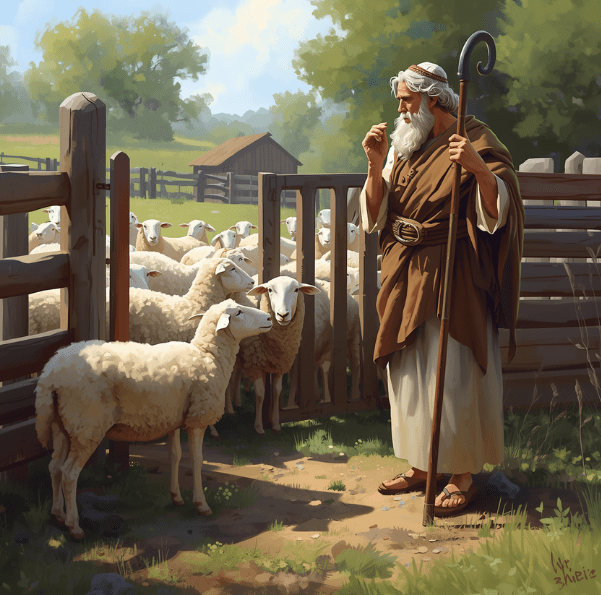
In his sermon, Dennis emphasises how the voice of Jesus, the Good Shepherd, actively shapes our lives and calls us to mission. He highlights the stories of Tabitha, Peter, Simon the Tanner, and Saul and illustrates how each person’s response to the Shepherd’s voice leads to transformation and inclusion in God’s work. Dennis urges the congregation to embody Christ’s compassion, challenge their comfort zones, and recognise the power of simple acts of hospitality. Ultimately, he calls everyone to listen for the Shepherd’s voice, prompting them to follow into a life filled with love, mercy, and mission.
Just a footnote: the late Pope Francis’ pectoral cross featured “Christ the Good Shepherd”, reminding him daily of the need to serve and protect. Francis tried to bridge the gap between the sheep with-in and those still to hear the voice of the Good Shepherd.
This weekend, we are reminded of the disciples’ fear and confusion on Easter evening when Jesus appears and offers them peace, showing his wounds instead of rebuke.
The story centres on Thomas, often labelled as “Doubting Thomas,” as simply being honest in his longing for a genuine encounter with Jesus, illustrating that asking questions is vital to discipleship.
Jesus embraces Thomas’ doubts and invites him to believe, leading to one of the strongest confessions of faith in scripture.
The message encourages us to bring our questions to Jesus, who meets us in our struggles and offers a deep, meaningful peace born from his suffering.
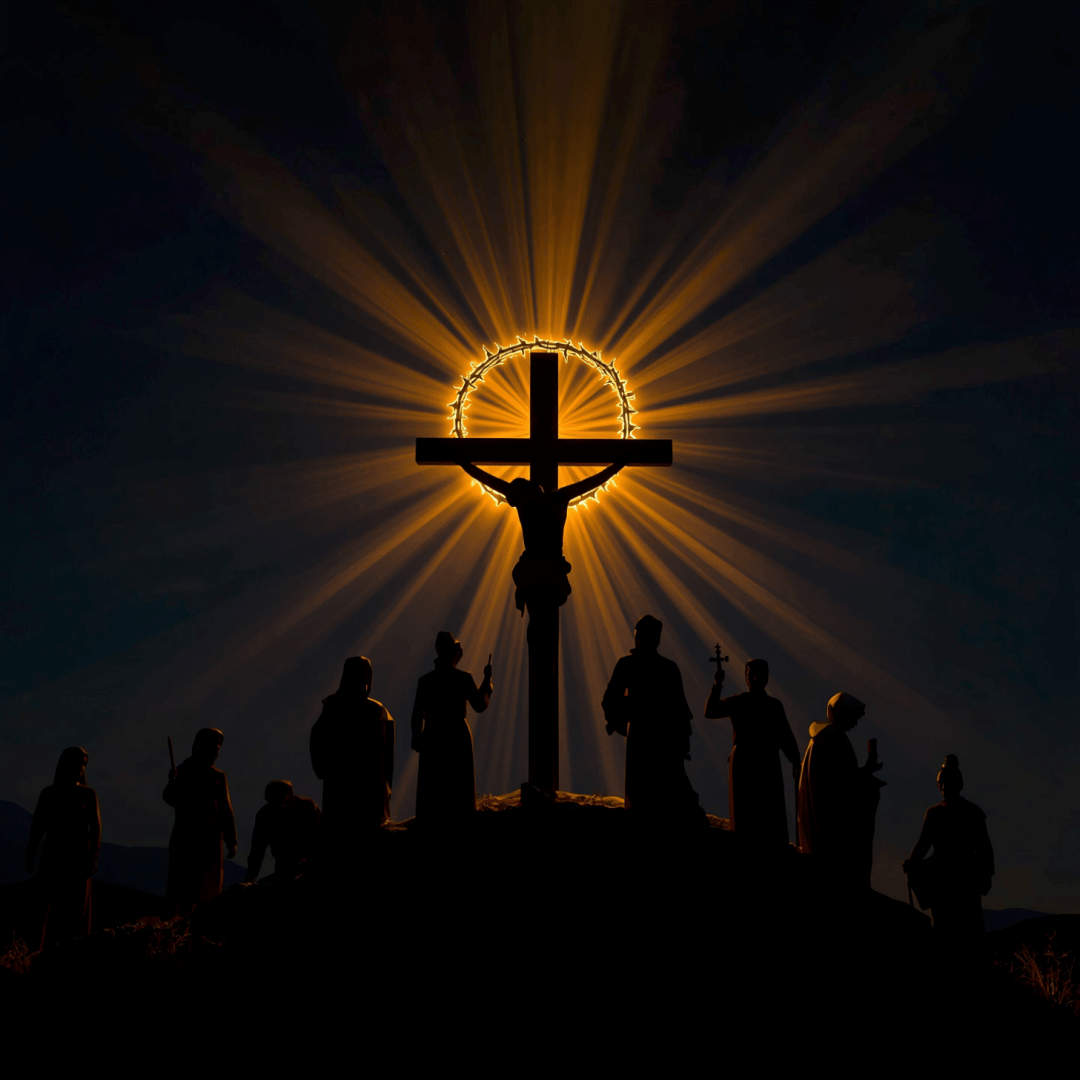
The Day of Resurrection sermon reflects on the significance of Maundy Thursday, Good Friday, and Easter Day, illustrating how the towel and the cross serve as tools for service and hope. It emphasizes that true greatness comes from serving others, and that Christ’s crucifixion reveals a deep understanding of human suffering.
The resurrection signifies a transformative hope, encouraging individuals to embrace their identity as people of service and mercy, renewing their baptismal vows to live out their faith actively.
As always, a series of discussion questions, a questioning/questionable cartoon, and a five-day devotion.
Today, we reflect on the contrasting attitudes of Martha and Mary during a meal with Jesus, emphasizing Mary’s total devotion as she anoints his feet with costly perfume. While viewed by Judas as wasteful, this act symbolizes profound love and sacrifice, challenging the tendency to disguise self-interest as concern for others. We are warned against the danger of self-righteousness, urging believers to evaluate their spiritual fragrance and the authenticity of their devotion. Ultimately, the sermon calls for a commitment to offering everything to Christ, following Mary’s example of love over hypocrisy.
Dennis explores the concept of being “prodigal,” illustrating how the wayward son and the father embody this term through reckless actions and extravagant forgiveness.
He emphasises the significance of remembering our identities and relationships with God, as the prodigal son’s return reflects God’s love and redemption for those who have strayed.
The sermon highlights the danger of self-righteousness, particularly from the elder son, who struggles to celebrate his brother’s return.
Ultimately, Dennis calls the congregation to rejoice in God’s grace and to reflect on their relationships with Him and each other, encouraging repentance and a readiness to follow God’s call.
In the words of the wonderful Mrs Dolly Levi, “Money is like manure: it is not worth a thing unless it is spread around.”
Today’s reflection is a short article exploring not only the “Parable of the Fig Tree” but also the nature of evil in the world.
Also included this week is some historical and cultural background to what can be a very problematic reading for many (courtesy of Church.Tech).
A quick summary:
1. Suffering and Resilience Rabbi Howard Kushner’s book highlights the pain of losing a child and reflects on current global struggles, including wars and natural disasters.
2. Moral Responsibility Jesus questions attributing blame to others for suffering, promoting self-reflection and personal accountability.
3. Repentance and Compassion True repentance entails personal transformation and the extension of grace to others under God’s will.
4. Nurturing Growth The parable of the fig tree illustrates the importance of patience in fostering growth, both in ourselves and in others.
Dennis reflects on the imagery of the fox and the hen to illustrate the protective love of Jesus. He highlights how Jesus, like a mother hen, seeks to gather and protect his peopledespite the dangers posed by deceitful leaders represented by the fox.
The sermon emphasises the importance of community support, urging individuals to love and care fortheir neighbours and to stand firm in faith amid societal challenges. Ultimately, it is a call for collaboration and prayer to foster hope and security in the community, paralleling Jesus’smission with their efforts to protect the vulnerable.
As the first Sunday of Lent begins, today’s reflections are on Jesus’ temptation in the wilderness, emphasising the importance of resisting distractions that lead us away from our divine calling. The reflection draws parallels between Jesus’ experience and the challenges the modern Church faces, highlighting how societal changes have impacted worship attendance and community engagement. The reflection reminds us that true faith requires unwavering commitment to God’s Word and trust in His provision, regardless of our temptations. As we begin our Lenten journey, he encourages us to follow Jesus’ example of resilience and faithfulness in the face of life’s distractions.
Dennis invites us to reflect on significant mountain-top experiences that deepen our faith and understanding of God’s presence. He recalls how Martin Luther King Jr. and biblical figures like Moses and Elijah had transformative encounters that shaped their divine missions. As we approach Lent, Dennis emphasises the importance of preparing ourselves by embracing the light that guides us through the darkness. He calls us to celebrate the Transfiguration and reaffirm our commitment to Jesus, who fulfils the law and leads us toward renewal and redemption.
This week, we discuss the importance of storytelling in faith and community, emphasising how stories shape our identities and values. He uses examples from Scripture, such as Joseph’s forgiveness, Paul’s insights on resurrection, and Jesus calming the storm, to illustrate that these narratives reflect ongoing relevance in our lives. The sermon highlights that our personal stories are interconnected and vital, forming the foundation of our communal faith. Ultimately, we are called for action inspired by God’s mission, which encourages us to share our experiences and make a meaningful difference in our community.
More an article for this week, as Dennis is having time on the bench (the organ bench) allowing for the excellent Fr. Jeff Berger to be granted the pulpit!
The article emphasises the importance of trusting God’s Word as a vital component of our faith journey. Through the readings from Jeremiah, Psalm 1, 1 Corinthians, and Luke, illustrated is the stark contrast between reliance on human strength and the blessings from faithful trust in God. It is important to encourage believers to reflect on their spiritual nourishment and to uphold the core tenets of Christianity, especially the significance of the Resurrection. Ultimately, all are called to embrace the values of God’s kingdom, finding true life and hope in divine truth rather than fleeting worldly successes.
Dennis explores mathematics, faith, and biblical narratives, mainly focusing on their significance within the context of Jesus’ teachings. He parallels ancient mathematicians like Pythagoras and Archimedes and their insights, linking them to Simon Peter’s call to be a fisher of men. The sermon emphasises that, despite human limitations, divine fulfilment is possible through faith and trust in Jesus, who redeems and transforms lives. Dennis invites the congregation to recognise their role in extending God’s love and justice to others, uniting them in a mission of hope and redemption.
PS: The number 153 has no significance regarding the number of people we actively catch in our ministry or what constitutes a decent size fish. In Tasmania, we always think that 12 inches (30 cm) is a good measure, but do remember that when we measure trout and salmon in Tasmania, we measure between the eyes.
Dennis emphasises the importance of recognising Christ in our midst through acts of mercy and humility, reflecting on the scriptural foundation laid by figures like Simeon and Anna. He highlights that God’s presence often manifests in the ordinary and lowly, teaching us that true salvation comes not from power but faith and devotion. The sermon urges the community to be attentive to Christ’s appearances in everyday situations and among the marginalised, challenging us to embody love and grace in our interactions. Ultimately, we are called vessels of God’s mercy, welcoming the Saviour with open hearts and recognising His transformative presence in our lives.
Dennis reflects on the intersection of faith, history, and social justice, using examples from Australian folk songs and contemporary political challenges. He emphasises that Jesus’ message of liberation and compassion remains vital in today’s world, where many still face oppression. He cites Bishop Budde’s call for mercy and justice, urging believers to reflect God’s love and grace in their actions. The sermon concludes with a reminder that, like Ezra and Nehemiah, we are called to rebuild our communities by engraining the teachings of God in our hearts and voicing them in our world.
Spiritual gifts, jars of purification, on the third day, Moses delivers the words of God from Mount Sinai. Somewhere in all this, there is also a wedding where Jesus’ mother is referred to as a WOMAN. This is significant because the next time he calls her WOMAN, he will be beginning his reign from the cross. So many manifestations occur around this ‘first sign’. In the middle of this is a call to all of us to be ‘at mission.’ No wonder the best wine was saved until last!
There is a lot in the selection of verses from Luke’s account of the baptism of Jesus. There is also a lot that is ‘assumed’ or added to it from the other synoptic gospels. What is important is that after prayer, Jesus receives his commission to begin ministry, a ministry that for us is totally good news.
Dennis encourages reflection on the story of the magi as we enter the Epiphany season, highlighting their journey and gifts of gold, frankincense, and myrrh. He emphasises that the magi, likely wise men rather than kings, were guided by a star rather than human authority, symbolising humility and divine revelation. The narrative contrasts the magi worship with Herod’s paranoia, illustrating that God’s kingdom reveals itself to seekers rather than the powerful. Dennis invites us to approach the Scriptures with an open heart, learning from the magi’s faith and attentiveness to God’s guidance.
Dennis celebrated the joy of the Christmas season while urging reflection on the true meaning behind the festivities. He encouraged listeners to recognise when they feel distant from God, drawing parallels with Mary and Joseph’s search for Jesus in the temple. Emphasising the importance of inviting God’s presence into everyday moments, he reminded the congregation that the greatest gift of the season is the ever-present love of God. As we celebrate, he urged everyone to reconnect with their faith and share God’s love with others during this beautiful time.
Sunday 08: The Third Sunday of Lent (Duthac of Ross and Tain, d 1050) Monday 09: Bosa of York (d 705), Sr Emma SSA (d 1939) Tuesday 10: Kessog of Lennox, Loch Lomond (d 520) Wednesday 11: Constantine, former King of Cornwall, missionary monk with Mungo (d ca 576) Thursday 12: Mura McFeredach, disciple of Colomba, patron of Fahan (d 645) Friday 13: Mochelloc (d 639), patron of Limerick, also known as Celloch, Cellog, Motalogus, Mottelog. Saturday 14: Queen Mathilda of Germany (d 968), a noble Saxon mother to two boys. Sunday 15: The Fourth Sunday of Lent: Mothering Sunday (Laetare) Aristobulus: one of the 72; possibly father of James and John, died in the 1st century, in England.
At the northern edges of the islands of Britain, the Trinity did not arrive as words or sermons. It moved quietly. It walked the rough paths beside lochs and rivers. It was carried in the lives of those who followed Christ where they were sent. Even now, the Gospel comes quietly. It shows up in a neighbour’s kindness. It shows in the steady courage of a community that endures. It is clear in the quiet faithfulness of those who serve unseen. The story of God’s love unfolds in these ordinary acts. It still walks with us where we live. It guides us along the paths we know.
We remember Duthac of Ross, whose quiet holiness drew pilgrims to the far north. In Kessog of Lennox, faith appears beside the waters of Loch Lomond. Here, the Gospel takes root in a land of hills and mist.
Through Mura McFeredach, we glimpse the living chain of discipleship flowing from Columba of Iona. Teacher to disciple. Elder to younger. Life shaping life. Faith does not spread by command, but by companionship.
Some of these saints carried crowns before they carried the cross. Constantine of Cornwall laid aside power to follow Christ in humility. Centuries later, Matilda of Ringelheim found another path to holiness. She used her wealth and influence to care for the poor and to build communities of prayer.
Others are known to us only faintly. Their names echo through place and memory. Mochelloc is more a presence in the land than a figure in books. Even this is a witness. Holiness leaves its deepest marks not in written records, but in living communities.
By the time we reach the quiet devotion of Sr Emma Rawlins SSA, the pattern remains. Centuries change. Continents change. The calling does not. The Gospel is still revealed in lives offered to God.
These saints remind us that faith grows through relationship. Teacher and disciple. Parent and child. Elder and novice. This is why the Church turns toward Mothering Sunday. We remember the mothers of faith. Those who first taught us to pray, who nurtured the fragile beginnings of belief, whose quiet example shaped our journey.
As the week unfolds, I invite you to remember someone who has guided or encouraged you in faith. Thank them with a call or a simple note. If they are no longer here, remember them in prayer, with gratitude. In this way, the story of faith echoes from one life to another.
The story of the Church is not written only in libraries. It is written in lives. Lives shaped by prayer, by humility, by courage.
And so we listen again for the same call in our own time. This week, choose one small act of kindness or encouragement. A quiet visit. A helping hand. A note of thanks. Let this simple intention become your prayer, living out faith in the ordinary moments ahead.
Not only to speak the Gospel, but to live it.
Second Sunday of Lent, commencing March 1st
This coming week’s calendar carries a quiet tenderness.
Sunday 01 The Second Sunday of Lent (Saint David of Wales) Monday 02 Chad of Mercia (d 672) Patron of Astronomers, Brother of Cynibild & Cedd Tuesday 03 Cele-Christ, Bishop of Leinster (d 782) Wednesday 04 Nonna, husband of Sant, mothe r of David of Wales Thursday 05 Piran (ca 380), Cornwall. Patron of Tin Miners Friday 06 Bilfrid, (ca 715). Silversmith who bound the Lindisfarne Gospels Saturday 07 Esterwine (d 668) Nobel born; Abbot of Monkwearmouth-Jarrow Abbey Sunday 08 The Third Sunday of Lent (Duthac of Ross and Tain d 1050)
The names feel less like distant monuments and more like family.
We remember David of Wales — preacher, ascetic, bishop of the western hills. Yet before he was a saint, he was simply a son. The Church also recalls Nonna, who carried him, shaped him, and prayed him into the man Wales would later claim. Before there were sermons, there was a mother’s steady faith. Before fasting and proclamation, there was the patient work of nurture.
Faith is rarely a fresh invention in a single generation. It is something handed down.
That same line runs through Chad of Mercia. Chad did not chase prominence. When his irregular appointment as bishop was challenged, he stepped aside with quiet humility. For him, authority was a trust to be received and relinquished, not a prize to be clutched. He walked on foot among his people until told to ride. The gospel was not merely on his lips; it was in his bones.
Further north, in Northumbria, devotion took on another shape. Bilfrid did not write the Lindisfarne Gospels; he bound them. He set jewels into their covers so that the Word would be honoured and kept safe. Others preached; he adorned. Others proclaimed; he preserved. Centuries on, the beauty still speaks.
In Cornwall, Piran is remembered not only as a preacher but as one who lived and worked among miners. Tin drawn out of dark rock became a sign that what is hidden can be brought to the surface. Vocation and holiness were not separate realms. The work of hands became the work of God.
In monastic houses shaped by Eosterwine, noble birth yielded to shared life. To lead was to labour beside others. Status gave way to service.
These saints are not held together by spectacle. They are joined by the simple act of passing something on.
A mother to her son.
A teacher to a student.
A craftsman to a book.
A community to its children.
Place still matters — Wales, Mercia, Cornwall, Northumbria, Ross and Tyne — coastal edges where wind and tide carve stone. Yet what endures is not the landscape alone, but love that has learned to last through daily faithfulness.
The name “Nonna” still rings across languages as grandmother: storyteller, memory-keeper, quiet strength at the heart of family life. It hints that holiness often begins in kitchens rather than cathedrals; in whispered prayers more than in public declarations.
The Lindisfarne Gospels have come through fire and raid, exile and return. They remain because someone cared enough to bind them well. Faith endures in much the same way — tended, adorned, passed on.
Perhaps this week invites us to look around gently and ask:
Who placed faith in my hands?
Whose prayers steadied my early steps?
What beauty or kindness have I been given to carry ahead?
Revelation does not always arrive in epistles.
Often it is made known in love.
And love, lived faithfully over time,
travels farther than we ever see.
A Benediction for What Has Been Handed On
May the God who formed you in love and named you before you knew your own name bless the memory of those who prayed you into being.
May the faith you received — in kitchens, in quiet words, in steadfast example — be strengthened in you, and through you, become gift for another generation.
May your days be shaped by gratitude, your work by devotion, your speech by kindness, and your life by the quiet courage of the saints. And may the love that carried you thus far carry you still — from tide to stillness, from questioning to trust, from this day into all your days. In the name of the Father, and of the Son, and of the Holy Spirit. Amen.
Break Open
The First Sunday of Lent: week commencing February 22nd
Sunday 22 The First Sunday of Lent (Martyrs of Arabia) Monday 23 Boswell (d 661) Abbot of Melrose, teacher of Aidan, Milburga of Shropshire (d 715) Tuesday 24 Matthias, Apostle and Martyr Wednesday 25 Walburga (d 779) Dorset raised, Mission to Germany with Willibad and Winebad Thursday 26 Porphyrius (d 429) Bishop of Gaza Friday 27 Baldomerus (d 650) Patron Saint of Locksmiths Saturday 28 Ruellinus, Bishop of Treguier (6th Century) succeeded Trudwal Sunday 01 The Second Sunday of Lent (Saint David of Wales)
This coming week, the Church’s calendar quietly fills with names from what we too easily call the “Dark Ages.” Yet these were anything but dark. They were centuries lit by lives — patient, courageous, local, and luminous.
We meet a remarkable gathering of saints: Walburga, Willibald, Winebald, Lioba, and Boniface. They are bound together by kinship, friendship, and a shared mission. Crossing from England into the forests of Germany, they carried not arguments but patterns of life: prayer, learning, stability, courage.
Boniface is remembered for felling the sacred oak of Thor, but this was not triumphalism. It was pastoral clarity — a way of saying that fear no longer ruled the forest. Around him stood women and men who founded monasteries, taught the faith, and shaped communities where trust grow.
Further north, another light shines.
From Iona came Aidan of Lindisfarne, walking rather than riding, teaching by companionship rather than command. Accompanying him were notable figures like Cuthbert of Lindisfarne. Others included Bosa of York, Ecgbert of Iona, and Boisil of Melrose. They were all formed by the rhythms of Melrose and Lindisfarne. Here holiness looked rugged and tender at once: seabirds, solitude, tides, and service held together.
Then there are the Mercian and Kentish royal women — Milburga, Mildred of Thanet, and Mildgytha. These are women of noble birth. They chose enclosure over court and prayer over power. Milburga’s stories speak of levitation in prayer. Whether taken literally or not, they witness to lives made light by trust in God.
If we give a gentle tilt of the leek toward David of Wales, we can hear a familiar echo. It is one of simplicity and clarity. There is monastic steadiness and holiness rooted in place.
What holds all these saints together is not clever theology written down, but theology lived out.
They show us:
Royalty redefined — power laid aside for service
Stability as mission — monasteries as centres of courage
Wonder without riddles — faith so embodied that even landscapes seemed to respond
These saints did not rush history. They stayed. They prayed. They taught. They crossed seas when needed, and stayed put when faithfulness required it.
We might feel quietly longing for places like Iona, Lindisfarne, the Tyne, or Melrose. That is perhaps why so many of us find ourselves drawn to them. We do so not as nostalgia, but as recognition. Something in those stones remembers what it is like to live slowly before God.
As their feast days come around this week, we give thanks not only for their stories, but for their witness:
that holiness is possible in uncertain times,
that the Church is built as much by patience as by passion,
and that light often shines most clearly where life is faithfully lived.
God of wind and wide sea, of heathered hill and tidal shore, who kindled your light in islands and forests when kingdoms rose and fell:
We thank you for your servants who walked the causeways at dawn, who prayed among stones and seabirds, who crossed cold waters for love of Christ, and who chose the cloister over the crown.
As you steadied Aidan’s steps, as you strengthened Cuthbert in solitude, as you gave courage to Boniface in the forest, and quiet radiance to Walburga and Milburga in prayer, so steady us.
When we cling to bright moments, teach us to descend in trust. When we fear the wilderness, be our sheltering rock.
When we long for distant holy places, plant holiness beneath our feet. May the light that shone on Iona’s shore and Lindisfarne’s sands burn also in our common life — in patience, in hospitality, in daily faithfulness.
Through Christ our Way and our Rest, who lives and reigns with you, in the unity of the Holy Spirit, one God, world without end. Amen.