Ring the bell. Carry the water. Let the tears flow.
This past week we continued to watch the Himalayas weep. A glacier collapsed, and a wall of water, mud, and stone tore through villages along the Nepal-Tibet border. Hundreds are dead. Thousands are missing. And if you are like me, you have felt the peculiar grief of watching a disaster unfold on a screen while you pour a glass of clean water and wonder what to do with your hands. This is one of the faces of the tears of creation. The ancient texts we hear today were not written for peaceful times. They were written for people who needed to know what to do when the world was falling apart.
It is tempting, already, to turn this disaster into an argument – to assign blame before we have even counted the dead. But this week is not a debate. It is a wound. Creation floods, tears through valleys, and leaves behind new ground, but always at a human cost. This has happened before. It will happen again. Some villages were caught unprepared. Others heard the sentinel’s warning.
Some alarms are familiar: the two-tone sirens that sound from wars past, or the warnings that sound before tsunamis, lahars, or storms. Yet the same sirens also call us back, signalling that it is safe to return, though we return changed, reconciling what has been with what now is.
The Church is called to be sentinel, servant, and mourner for a suffering creation. When the little ones suffer, we do not turn to despair or easy comfort. We are called to sound the alarm, to serve, and to grieve. Grief is part of our calling.
Ring the bell. Carry the water. Let the tears flow.
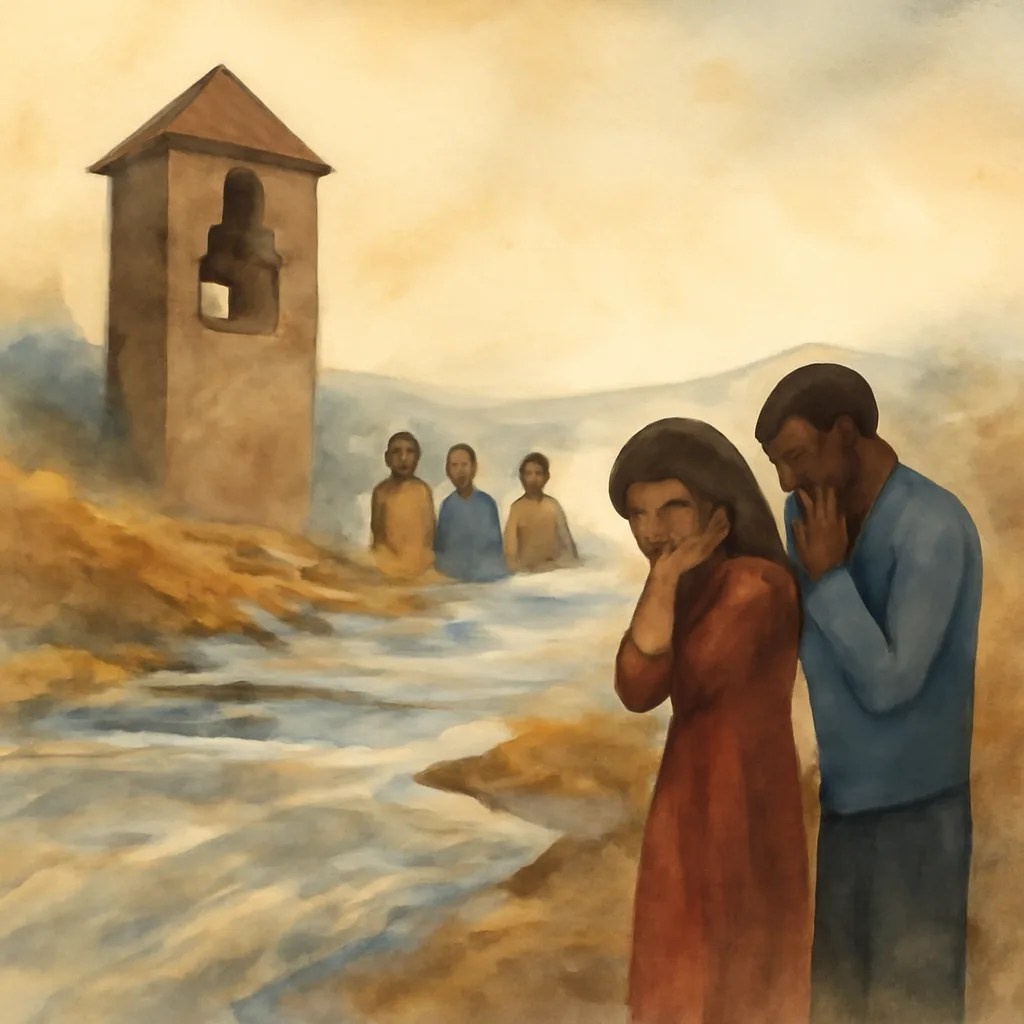
Reconciliation is not only sorrow for what has been, but the strength to do what is needed. The sentinel sounds the alarm, and we are called to carry water to those in need. Sometimes, one act of love is not enough. More is asked of us. The little ones are children, families, homes, the earth itself. There will be times when we join creation in lament, grieving what has been lost and what may yet be lost. We cannot turn away, even when our eyes sting with tears for the one for whom the bell now tolls.
At the heart of our readings is reconciliation—with ourselves, with one another, with the community. This is the heart of our common life. There are those among us who are hurting, separated by pain, by illness, by the actions of others.
If someone is out of step with the community, the bell is already ringing. Forgiveness begins within. Grief is personal, and sometimes unpredictable. Jesus reminds us that reconciliation may require heavy lifting. If the first step does not heal, we share the task. If healing still does not come, it becomes a work for the whole community. Never are we called to shun or cast out.
Sometimes separation comes from within, but it is not Jesus’ intention that we exclude to ease our pain. We call. We tend. We lift, share, guide, and love. If space must be made for safety, then so be it. Whether the outcome is happiness or grief, we are all bearers of tears. Sadness, joy, even laughter—these are the layers of reconciliation. Jesus does not give up on us. He longs for all to be one in him and for him to be one in us.
If the pain comes from the very ground we inhabit, then as the sentinel rings the bell, we must ask: how much water will we carry? How much work will we do to restore a connection built on love, respect, and care for all that has been entrusted to us?
When someone is hurt—by their own actions or by another—we are called by love to respond. Paul writes to the Romans that we owe no one anything except to love one another, for love is the fulfilment of the law. In a week like this, love looks like carrying water: to the displaced, to the grieving, to the earth itself. The world we share, whether community, creation, or society, asks us to be servants, members of one body, each carrying our own gifts. There will be more tears ahead. What matters now is to shoulder the weight of reconciliation, to move forward as one.
“This season, we are surrounded by the image of Living Water – the river flowing from the temple, healing the Dead Sea. But the water that crashed through Nepal this week was not living water. It was death dressed as flood. The prophet Ezekiel knew both. In chapter 33, he is the watchman on the wall, ringing the bell for danger. In chapter 47, he sees the river of healing. The Church must hold both. We cannot rush to the river without hearing the bell.”
Ring the bell. Carry the Water. Let the tears flow.
In our community and in ourselves, there is much to celebrate, and much to mourn, to repair, to prepare for. This is the heart of reconciliation. It is not about restoring what was, but about responding with Christ to make all things new. Even in the act that reconciled us to our Creator, Jesus’ body bore the scars. A sign of what was, and an assurance of what could be.
So we ring the bell. We carry the water. And we let the tears come – not because we have solved the grief of creation, but because we refuse to look away from it. This is what the Church looks like when it is faithful: watchman, servant, and mourner. And this is how we honour the gift of creation entrusted to us – not by pretending the river is already here, but by keeping watch, and carrying water, and weeping, until it is.


